You may find yourself at the forefront of strategic innovation by harnessing competitive intelligence. This multifaceted discipline equips you with the insights necessary to navigate the complexities of modern markets, enabling you to identify opportunities and thwart potential threats. In this complete guide for 2025, you will discover the methodologies to gather, analyze, and apply intelligence to gain a decisive edge over competitors. Embrace this knowledge to transform uncertainty into strategic advantage, ensuring success in an ever-evolving landscape.
Key Takeaways:
- Competitive intelligence (CI) involves gathering and analyzing information about competitors and market trends to inform strategic decision-making.
- Effective CI practices require a structured approach, incorporating tools, techniques, and ethical considerations to ensure compliance and accuracy in data collection.
- The role of technology in CI is expanding, with advanced analytics and artificial intelligence playing a significant part in processing and interpreting data for actionable insights.
The Strategic Significance of Competitive Intelligence
Understanding competitive intelligence is crucial for gaining a strategic edge in today’s fast-paced business environment. By leveraging insights about your competitors, market trends, and consumer behavior, you can make informed decisions that position your organization favorably. The integration of competitive intelligence into your strategic framework allows you to identify gaps in the market, anticipate industry shifts, and ultimately influence your company’s trajectory.
Harnessing Data for Strategic Advantage
Effective utilization of data enables you to transform raw information into actionable insights. By analyzing data related to competitor pricing, customer preferences, and technological advancements, you can uncover patterns that reveal opportunities or threats. This strategic advantage allows you to redefine your offerings, optimize marketing efforts, and refine operational efficiencies, setting your organization apart in a crowded marketplace.
The Role of Competitive Intelligence in Business Success
Competitive intelligence serves as a cornerstone for your business’s success by informing critical decision-making processes. In a landscape characterized by constant change, staying ahead of competitors requires not just awareness but proactive engagement with emerging trends and consumer demands. With access to reliable data, you develop strategies that anticipate market shifts, mitigate risks, and seize growth opportunities that others might overlook.
For example, companies like Netflix and Amazon have consistently utilized competitive intelligence to tailor their offerings based on viewing habits and purchasing patterns. By continuously monitoring competitors, these giants adapt their strategies in real-time, allowing them to innovate and thrive while others struggle. Implementing a robust competitive intelligence program means you’ll not only respond to market changes but can also dictate the pace at which your business evolves, fostering a culture of agility and foresight in your organization.
The Modern Tools of Competitive Intelligence
Modern competitive intelligence relies on a suite of sophisticated tools designed to streamline data collection and interpretation. These platforms enhance your ability to analyze market trends, assess competitor strategies, and make informed decisions. Advanced software integrates various data sources while providing real-time insights, allowing you to stay several steps ahead in a constantly changing landscape.
Navigating Advanced Analytics and AI Technologies
Utilizing advanced analytics and AI technologies transforms the way you gather insights. These tools can process vast amounts of data, identifying patterns that human analysts might overlook. With predictive analytics, you can anticipate shifts in market dynamics and competitor actions, streamlining your strategy to align with emerging opportunities.
- Data visualization tools for clear insights.
- Competitive benchmarking software for performance comparison.
- AI-driven sentiment analysis tools for understanding consumer perceptions.
| Tool Type | Description |
|---|---|
| Data Mining Software | Extracts meaningful patterns from large datasets. |
| Business Intelligence Platforms | Fuses data from various sources, presenting them in an easily interpretable format. |
| Competitive Analysis Tools | Allows you to analyze direct competitors in specific markets. |
Leveraging Social Media and Public Data for Insights
Social media platforms and public databases offer rich veins of information to mine for competitive intelligence. With the right approach, you can assess sentiment toward your brand and competitors, monitor engagement trends, and gather demographic insights from user profiles. The breadth of available public data enriches your understanding of market dynamics and consumer preferences.
Platforms like Twitter, Facebook, and LinkedIn are teeming with information that can significantly inform your strategy. You can analyze competitor posts, customer feedback, and industry trends to craft a holistic view of the market. Tools like Google Trends provide real-time insights into what customers are searching for, allowing you to pivot your approach based on fluctuating interests. Such data helps you refine marketing strategies and product offerings, solidifying your position in an increasingly competitive environment.
Crafting a Competitive Intelligence Framework
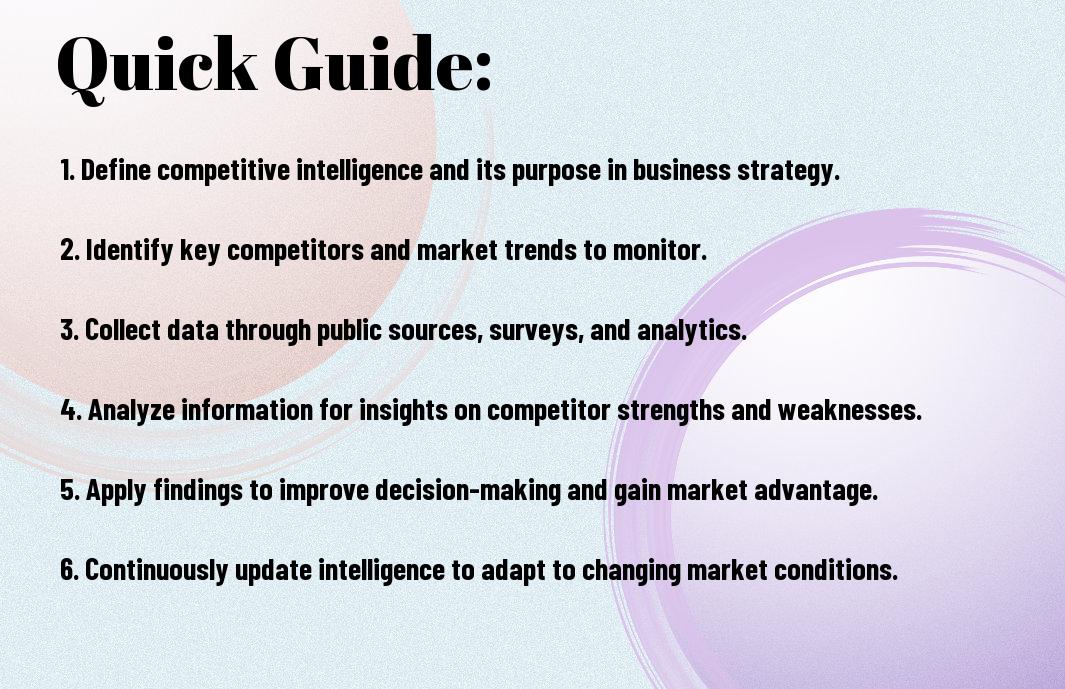
Implementing an effective competitive intelligence framework is crucial for using insights strategically within your organization. Start by defining your objectives, identifying key stakeholders, and establishing a CI team that aligns with your business goals. This framework should be flexible enough to adapt to industry changes while ensuring that valuable information flows seamlessly between departments for analysis and action.
Structuring Your CI Processes for Maximum Impact
An efficient CI process begins with the collection of data from various sources, such as market reports, competitor analysis, and customer feedback. Use tools and technology to streamline data gathering and analysis, allowing you to synthesize information into actionable insights. By prioritizing key metrics and integrating findings into decision-making processes, you create a robust structure that maximizes your impact in the market.
Cultivating a Culture of Intelligence within Organizations
Evolving a culture of intelligence within your organization revolves around fostering curiosity and open communication. Encourage employees at all levels to share insights and observations about market trends or competitor actions, creating an environment that values knowledge. Regular workshops, training, and an accessible repository of intelligence can support this culture, allowing team members to recognize the significance of their contributions to strategic objectives.
To truly cultivate a culture of intelligence, leadership must exemplify and reinforce the value of CI. Implementing initiatives like “intelligence sharing sessions” helps break down silos, fostering collaboration across departments. When you highlight success stories where CI directly influenced business outcomes, it inspires your team. Investing in tools that facilitate knowledge sharing and updating employees on current CI developments keeps everyone engaged and motivated to contribute, ultimately positioning your organization to anticipate and react effectively to competitive shifts.
Ethical Boundaries and Legal Considerations
Adhering to ethical boundaries and understanding legal considerations are necessary components of effective competitive intelligence practices. Engaging in competitive intelligence involves a delicate balance; while you aim to gather insights to enhance your strategic positioning, you must also navigate regulations and ethical standards that govern data acquisition and usage. Familiarizing yourself with these boundaries will not only protect your organization from potential legal repercussions but also foster a culture of integrity and responsibility within your competitive intelligence activities.
Navigating the Fine Line: Ethics in Competitive Intelligence
Ethics in competitive intelligence requires you to approach data gathering with a sense of responsibility and professionalism. Utilizing public sources and enhancing relationships with industry peers is acceptable, but any actions that could be perceived as manipulative or deceptive undermine your integrity and could result in serious consequences. Establishing a benchmark for ethical behavior will help you earn trust and respect, both inside and outside of your organization.
Understanding Legal Limitations: What You Can and Cannot Do
Legal limitations dictate that you must stay within the confines of relevant laws when conducting competitive intelligence. Engaging in practices such as corporate espionage, using illegal means to acquire trade secrets, or violating privacy laws can lead to severe penalties, including fines and imprisonment. Always consider the ramifications of your data collection methods to ensure compliance with applicable laws and regulations.
Different jurisdictions have varying laws affecting competitive intelligence practices. For instance, the Defend Trade Secrets Act in the U.S. protects confidential business information, while the General Data Protection Regulation (GDPR) in the European Union imposes strict rules on collecting personal data. Familiarizing yourself with local laws is vital; consult legal counsel when uncertain about the boundaries of ethical conduct. This understanding helps create a solid foundation for your competitive intelligence strategy, ensuring that you operate within legal limits while still obtaining vital insights for your organization.
Future Trends: The Evolution of Competitive Intelligence
The landscape of competitive intelligence is evolving rapidly, driven by advancements in technology and the growing complexity of markets. Companies that integrate AI and machine learning will gain unprecedented insights from vast datasets, allowing them to make informed decisions faster than ever. Collaborating with stakeholders and leveraging social media analytics will become second nature, enabling your organization to remain agile and responsive to real-time changes in the competitive environment.
Anticipating Market Shifts and Emerging Technologies
Staying ahead of the competition requires you to not only monitor current trends but also to anticipate market shifts and emerging technologies. By implementing advanced predictive analytics, you can identify potential disruptions in your industry, allowing you to adapt your strategy proactively. Leveraging tools that analyze consumer behavior and sentiment will enhance your ability to forecast changes and adjust your offerings accordingly.
Preparing for the Intelligence Demands of 2025
The competitive landscape in 2025 demands a sophisticated approach to intelligence gathering. As data sources proliferate, your organization will need to refine its tools and processes to effectively sift through noise and extract actionable insights. Investing in robust security measures to protect your data, while fostering a culture of continuous learning and collaboration across teams, will ensure that intelligence efforts remain aligned with overarching business goals.
To meet the intelligence demands of 2025, prioritize building partnerships with data analytics providers and AI specialists. Upskilling your team in advanced analytical techniques will enhance your capability to interpret complex data effectively. Utilizing dashboards that consolidate insights from various departments can streamline decision-making processes, ensuring that your organization is not just responding to changes but actively shaping the market landscape. In a world characterized by rapid change, agility and foresight will set you apart from competitors who fall behind.
Summing up
So, as you navigate the complexities of competitive intelligence, remember that it transcends mere data collection. It empowers you to make informed decisions, anticipate market trends, and bolster your strategic positioning. By harnessing this knowledge, you enhance your ability to innovate and adapt in an ever-evolving landscape. Embrace the techniques and tools discussed, and you will be well-equipped to thrive in 2025 and beyond, constantly outpacing your competition through the insightful application of intelligence.
FAQ
Q: What is competitive intelligence?
A: Competitive intelligence (CI) refers to the systematic collection, analysis, and interpretation of information about competitors and the market environment. It enables businesses to understand their competitive landscape, make informed strategic decisions, and identify potential opportunities or threats. CI can include a variety of information sources, such as public records, news articles, customer feedback, and market trends.
Q: Why is competitive intelligence important for businesses?
A: Competitive intelligence provides valuable insights that can guide organizations in their strategic planning. By understanding competitors’ strengths and weaknesses, businesses can better position themselves in the market. CI helps companies anticipate market trends, identify gaps in their offerings, and devise strategies to enhance their competitive advantage. Ultimately, it supports informed decision-making that can lead to increased profitability and market share.
Q: What are the key components of a competitive intelligence program?
A: A robust competitive intelligence program typically includes several key components: data gathering, analysis, dissemination, and action. Data gathering involves collecting pertinent information from various sources. Analysis requires examining the collected data to identify patterns and insights. Dissemination ensures that intelligence is shared with relevant stakeholders within the organization. Finally, action refers to using the insights gained from CI to inform strategic initiatives and decision-making processes.
Q: What tools and techniques are commonly used in competitive intelligence?
A: There are numerous tools and techniques employed in competitive intelligence. Common methods include SWOT analysis (assessing strengths, weaknesses, opportunities, and threats), competitor profiling, market analysis, and data visualization tools. Software platforms for data mining and analytics can also facilitate the gathering and interpretation of information. Networking and industry events can serve as valuable opportunities for informal intelligence gathering through discussions with peers and stakeholders.
Q: How can businesses ensure ethical practices in competitive intelligence?
A: Ethical practices in competitive intelligence are necessary to maintain integrity and compliance with legal standards. Businesses should adhere to principles such as transparency, honesty, and respect for privacy. This includes avoiding deceptive means of acquiring information and ensuring that all data is gathered responsibly. Establishing an ethical framework and providing training on best practices can help guide employees in navigating the complexities of competitive intelligence while upholding legal and ethical standards.
