With the rapidly evolving landscape of business, it is imperative for you to understand the competitive intelligence employment trends shaping today’s job market. Companies are increasingly seeking individuals who possess analytical skills and a keen understanding of the competitive landscape. By exploring these trends, you can identify the key roles and skills in demand, allowing you to position yourself with the best opportunities in a thriving field. Prepare yourself to navigate this dynamic arena, where strategic insight will define the path to success.
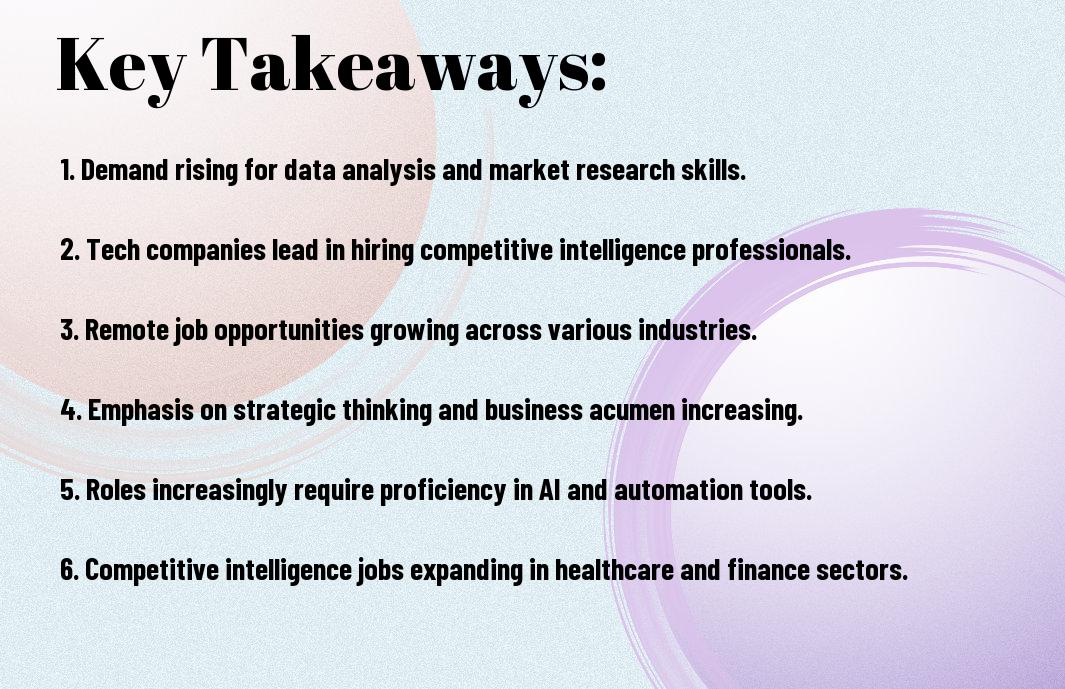
Key Takeaways:
- Companies are increasingly seeking candidates with advanced skills in data analytics and technology, highlighting the importance of proficiency in tools that support competitive intelligence.
- There is a growing demand for professionals who can synthesize market trends and insights into actionable strategies, emphasizing the value of strong communication and analytical abilities.
- Employers are prioritizing candidates with cross-functional expertise, particularly in marketing, sales, and strategic planning, indicating a preference for well-rounded individuals who can collaborate across departments.
The Demand Surge: Key Industries Fueling Growth
A significant shift is occurring in competitive intelligence, with several key industries driving the exponential demand for skilled professionals. As companies recognize the value of actionable insights, sectors such as technology, healthcare, and finance are expanding their talent pools. In fact, the global competitive intelligence market is projected to grow to $2 billion by 2025. This explosion of interest isn’t just about quantity; it’s a qualitative leap in understanding consumer behaviors, thereby reinforcing your necessity to align your skills with the evolving landscape.
Technology Companies Adopting Competitive Intelligence
Technology firms are at the forefront of integrating competitive intelligence into their strategic frameworks. Major players like Google and Amazon leverage data analysis to understand their market position and adjust swiftly to competitors’ moves. As a direct result, they are actively seeking professionals adept in data analytics, ensuring you have a rich landscape of opportunities to tap into.
Healthcare Sector’s Evolving Need for Market Insights
The healthcare sector is undergoing a transformative phase, increasingly reliant on market insights to adapt to regulatory changes and shifting patient demographics. Organizations such as Johnson & Johnson and Pfizer are investing significantly in competitive intelligence roles, focusing on understanding customer needs to enhance treatment efficacy and market positioning.
This evolution in the healthcare landscape reflects a growing commitment to data-driven decision-making, especially in the face of unprecedented challenges like the COVID-19 pandemic. Companies in this sector are realizing that to thrive, they must tap into patient preferences and trends, driving demand for professionals who can extract actionable intelligence from complex datasets. As such, positions related to market analysis, strategic planning, and competitive assessment are sharply on the rise within the healthcare space, highlighting a clear pathway for your growth in this imperative field.
Skill Sets Gaining Traction in Competitive Intelligence Roles
As the field of competitive intelligence evolves, specific skill sets are becoming increasingly sought after by employers. Candidates who possess a combination of technical expertise and strategic thinking are more competitive in the job market. Employers are particularly focusing on data interpretation, market research methodologies, and proficiency in analytical tools. Opportunities are ripe for those prepared to integrate these competencies into their intelligence strategies, enabling firms to navigate uncertainty and capitalize on emerging trends.
Data Analytics: The New Cornerstone of Decision Making
Data analytics has emerged as the backbone of decision-making in competitive intelligence roles. Organizations rely on data-driven insights to enhance their strategic positioning, making it necessary for professionals to master tools like Python, SQL, and advanced Excel techniques. With up to 80% of business leaders citing data as a valuable asset, your ability to glean actionable insights from complex datasets can significantly influence your career trajectory.
Strategic Thinking: A Prerequisite for Success
Strategic thinking differentiates successful professionals in competitive intelligence from their peers. This skill involves analyzing market trends, assessing competitive landscapes, and anticipating potential challenges and opportunities. Employers search for individuals who can employ critical analysis to formulate effective strategies, thereby enhancing their organization’s market response. Your capacity to synthesize diverse information and craft a coherent strategy directly impacts your effectiveness in driving informed decisions and achieving desired outcomes.
Strategic thinking requires a keen ability to connect the dots between disparate pieces of information. You’ll need to understand not just what the data indicates, but also how external factors such as economic shifts, technological advancements, and changes in consumer behavior affect your industry. Developing foresight related to potential market disruptions and competitor movements is vital. Techniques like SWOT analysis and scenario planning can sharpen your strategic insight, positioning you as an invaluable asset in any competitive intelligence environment.
Job Titles on the Rise: Emerging Roles in Competitive Intelligence
As companies recognize the value of competitive intelligence in driving strategy, new job titles are emerging to meet these needs. You’ll find roles like Competitive Intelligence Analyst and Market Research Specialist becoming necessary components of organizational frameworks. These positions not only leverage traditional analytical skills but also demand a creative approach to gathering and interpreting data in a fast-paced marketplace.
Competitive Intelligence Analyst: The New Essential Position
The Competitive Intelligence Analyst is increasingly viewed as a key player in strategic decision-making processes. Your ability to analyze market trends, competitor moves, and consumer behavior positions you at the forefront of business strategy, enabling organizations to navigate complexities in various industries effectively.
Market Research Specialist: Blending Tradition with Innovation
The role of a Market Research Specialist showcases a fascinating blend of traditional research methodologies and innovative analytical technologies. With the influx of big data and advanced analytics, your skills become necessary in synthesizing information that drives powerful insights and actionable strategies.
Market Research Specialists are adapting to the modern landscape by incorporating tools like machine learning and social media analysis into their strategies. This commitment to innovation ensures that you remain relevant while uncovering nuanced patterns in consumer behavior. Companies now expect your role to not only gather quantitative data but also to derive qualitative insights that inform product development, marketing strategies, and customer engagement practices, bridging the gap between conventional market research and the demands of a digital-first world.
Remote Work and Competitive Intelligence: A Paradigm Shift
The transition to remote work has significantly altered how organizations conduct competitive intelligence. Emphasizing flexibility and efficiency, companies have adapted their strategies to leverage remote tools that facilitate real-time data collection and analysis. This shift presents both newfound opportunities and challenges that require innovative approaches to competitive analysis in a virtual landscape.
The Rise of Virtual Collaboration Tools
Your ability to harness virtual collaboration tools has become paramount in enhancing competitive intelligence efforts. Platforms like Slack, Microsoft Teams, and Zoom have allowed teams to seamlessly share insights, conduct meetings, and analyze data, irrespective of geographical barriers. These tools not only streamline communication but also foster a more inclusive environment where ideas can flow freely, leading to more robust intelligence outcomes.
Challenges and Opportunities in Remote Competitive Analysis
Operating in a remote environment introduces distinct challenges and opportunities for competitive analysis. While remote work can limit immediate access to sources of intelligence, it also opens avenues for acquiring global insights that were previously difficult to attain. You might face issues like data security and information overload; however, by implementing structured processes, you can effectively navigate these hurdles to enhance your competitive edge.
Delving deeper into the challenges, the abundance of information available online can lead to analysis paralysis, making it difficult to pinpoint what is most relevant to your objectives. Moreover, building trust and rapport in remote settings can be a hurdle for teams reliant on collaborative efforts. Ensuring that your remote team has clear roles and maintains consistent communication is important. Balancing these challenges with an ever-expanding array of digital resources can lead to better-informed decisions, gaining you an advantage in the competitive landscape.
Future-Proofing Your Career in Competitive Intelligence
As the landscape of competitive intelligence evolves, you must actively adapt to stay relevant. Embracing a mindset focused on continuous development not only enhances your skill set but also positions you as an invaluable asset to your company. By honing your analytical abilities and mastering emerging technologies, you secure your place in this dynamic field.
Lifelong Learning: Keeping Pace with Industry Changes
Today’s competitive intelligence roles demand an unwavering commitment to lifelong learning. Enroll in specialized courses, attend industry conferences, or explore online platforms that offer the latest insights into market dynamics and data analytics. Staying updated with market trends enables you to refine your strategies, ensuring that your contributions lead the charge in a rapidly changing environment.
Networking Strategies: Building Bridges in a Digital Age
In competitive intelligence, forging connections can open doors to key opportunities. Utilize digital platforms such as LinkedIn to engage with industry thought leaders, participate in relevant groups, and share your insights. Building a robust network enhances your visibility, allowing you to stay informed about emerging trends and potential job openings.
Effective networking involves more than simply making connections; it’s about cultivating relationships. Engaging with others in the field through webinars, forums, and conferences fosters meaningful conversations that facilitate knowledge-sharing. You can also consider mentorship opportunities, where both you and your mentor exchange insights and experiences, further enriching your understanding of the competitive intelligence landscape.
Conclusion
Following this exploration of competitive intelligence employment trends, you will find that companies are increasingly seeking professionals who can synthesize data for strategic decision-making. Your ability to analyze market conditions, understand consumer behavior, and anticipate competitors’ moves will position you as a valuable asset. Embrace continuous learning and adapt to emerging tools and methodologies in this evolving field, ensuring that your skill set remains relevant in a competitive job market.
FAQ
Q: What is competitive intelligence and why is it important for companies?
A: Competitive intelligence refers to the process of gathering, analyzing, and utilizing information about competitors, market trends, and overall industry conditions. It is important for companies because it helps them make informed strategic decisions, identify market opportunities, understand competitor strengths and weaknesses, and anticipate industry changes. By leveraging competitive intelligence, businesses can enhance their performance and maintain a competitive edge.
Q: Which industries are currently seeking competitive intelligence professionals?
A: Various industries are actively looking for competitive intelligence professionals. Key sectors include technology, pharmaceuticals, finance, and consumer goods. Companies in these industries understand the value of staying ahead of competitors and are increasingly investing in competitive intelligence roles to enhance their strategic capabilities. Moreover, firms within data analytics and consulting are also hiring for expertise in competitive intelligence as it aligns well with their service offerings.
Q: What skills are employers looking for in competitive intelligence candidates?
A: Employers seek a combination of analytical, research, and communication skills in competitive intelligence candidates. Proficiency in data analysis tools, market research methodologies, and the ability to interpret complex information are vital. Strong communication skills are necessary for presenting findings and insights clearly to various stakeholders. Additionally, familiarity with industry trends and understanding business strategy are highly valued traits in potential hires.
Q: How can job seekers effectively position themselves for roles in competitive intelligence?
A: Job seekers can effectively position themselves for competitive intelligence roles by gaining relevant experience in research, data analysis, and business strategy. Pursuing certifications in competitive intelligence or related fields can enhance their credentials. It is also beneficial to network with professionals in the industry, stay updated on market trends, and demonstrate a proactive approach to understanding competitor dynamics during interviews. Tailoring resumes to highlight applicable skills and experiences will also make candidates stand out.
Q: What are some common job titles in the competitive intelligence field?
A: Common job titles in the competitive intelligence field include Competitive Intelligence Analyst, Market Research Analyst, Business Intelligence Specialist, and Strategic Insights Manager. Other variations might include roles such as Corporate Strategist and Market Intelligence Manager. Each of these positions may have different focus areas, but all revolve around gathering, analyzing, and acting on competitive data to inform business strategies.
